The Mirror and the Maze: The Introvert’s Curse of Deep Awareness
Posted on October 10, 2026
The Mirror and the Maze: The Introvert’s Curse of Deep Awareness
For many introverts, the mind is a sanctuary. It is a richly textured, vivid inner landscape where ideas are born, connections are made, and the chaos of the outside world is quieted. This capacity for deep reflection develops immense mental strength, empathy, and acute self-awareness.
Yet, this gift carries a heavy, unspoken tax. The exact same mind that is capable of profound insight is equally capable of turning inward to hyper-analyze its own suffering. Introverted reflection is a double-edged sword: it expands our awareness, but it also becomes a curse when it forces us to intimately understand and dissect our own pain.
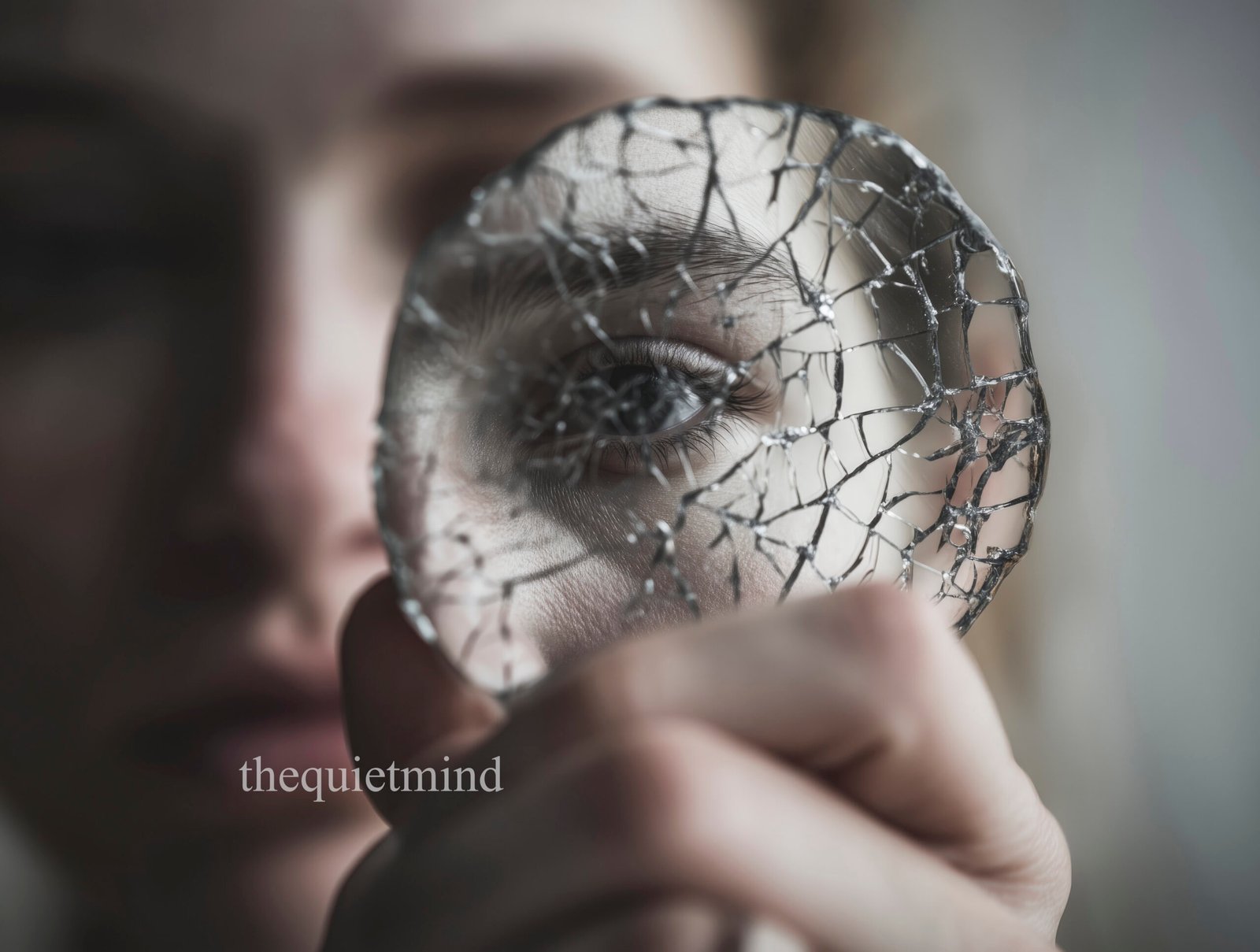
Psychologists often refer to this as the “introspection trap.” When your thoughts are your default home, that home can easily transform into a room lined with mirrors. You are left with nowhere to hide from your own regrets, anxieties, or heartaches.
The Architecture of the Introverted Mind
To understand why introverts feel their pain so acutely, we have to look at how they process the world. Introverts typically possess a highly sensitive nervous system and a deep processing style. They don’t just experience an event; they chew on it, look at it from multiple angles, and store it away in a highly organized mental filing cabinet.
The Mirror and the Maze: The Introvert’s Curse of Deep Awareness
When life is going well, this results in a beautiful, poetic appreciation for existence. But when life hurts, this processing style turns destructive.
Emotional Magnification: While others might experience a setback and naturally distract themselves, an introvert sits with it. The pain is thoroughly examined, broken down, and felt in its entirety.
The Rumination Loop: Self-awareness can easily devolve into a toxic loop. Instead of learning from a painful experience and moving on, the introverted mind may replay the event like a movie on a loop, searching for “why” it happened and what they could have done differently.
The Illusion of Isolation: Because an introvert’s internal dialogue is so complex, they often fall into the trap of believing that no one else could possibly understand their depth. This drives them further into isolation, cut off from the very external perspectives that could heal them.
In essence, the introvert doesn’t just feel pain—they understand it. They map its contours, identify its origins, and predict its future implications. This hyper-awareness makes the suffering feel permanent, heavy, and deeply personal.
Shifting from a Trap to a Sanctuary
If you possess a deeply reflective mind, the goal is not to stop thinking or to numb your awareness. You cannot turn off the depth of who you are, nor should you want to. Instead, the goal is to change how you relate to the thoughts inside your head.
1. Move from “Why” to “What”
When we are trapped in painful reflection, we endlessly ask ourselves why questions: “Why did I say that?”, “Why am I always like this?”, or “Why does this hurt so much?” These questions trigger blame and keep us stuck in the loop. Instead, practice objective awareness by asking what questions: “What am I feeling right now?” or “What triggered this wave of sadness?” This subtle shift moves you from being a victim of your emotions to an objective observer of them.
2. Build a Pressure Valve
An introverted mind without an outlet is a pressure cooker. You must find a way to move the thoughts out of your head and into the physical world.
Journaling acts as a literal brain dump, transferring the abstract, overwhelming cloud of pain onto a tangible page.
Art, music, or poetry allows you to transform raw suffering into something beautiful and meaningful. When you create, you take the pain out of your identity and put it into an object outside of yourself.
3. Anchor to the Present
Pain lives in the past (regret) or the future (anxiety). The mind can only trap you if you allow it to wander into those timelines. When the internal noise becomes too deafening, intentionally pull your senses into the immediate, physical present. Focus on the cold weight of a glass of water, the rhythm of your breathing, or the texture of the floor beneath your feet. It breaks the mental loop and gives your nervous system a chance to rest.
The Mirror and the Maze: The Introvert’s Curse of Deep Awareness
The Wisdom Hidden in the Heavy
Living with a mind that feels and understands everything so deeply is exhausting, but it is not a flaw. It means you are living consciously. You are refusing to live on the surface, choosing instead to engage with the full spectrum of human experience—even the dark parts.
The pain you understand so intimately is often the exact raw material that refines your greatest strengths. It is what makes you an exceptionally empathetic friend, a profound thinker, and a deeply authentic person. Your mind may sometimes feel like a maze, but with patience and practice, you can learn to navigate its paths without getting lost in its corners.